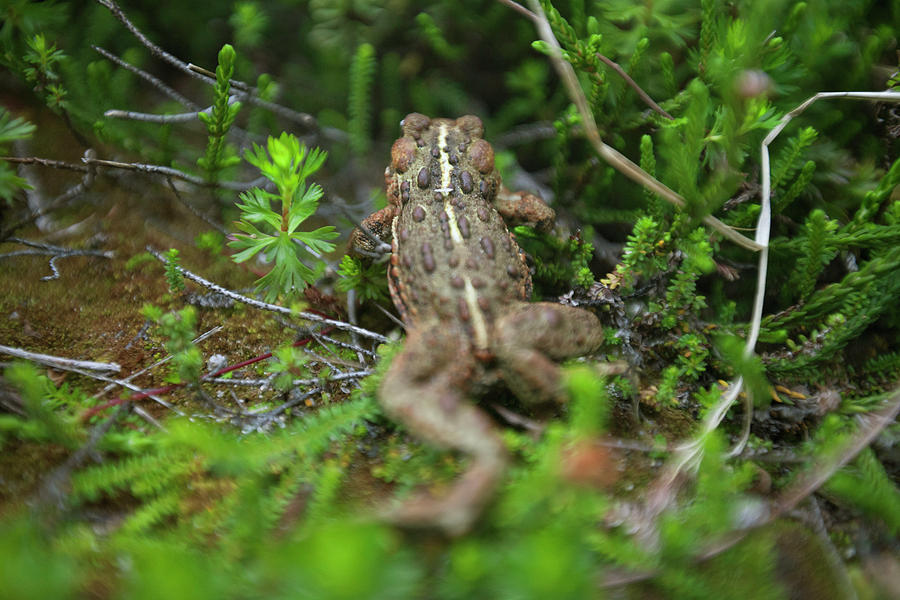
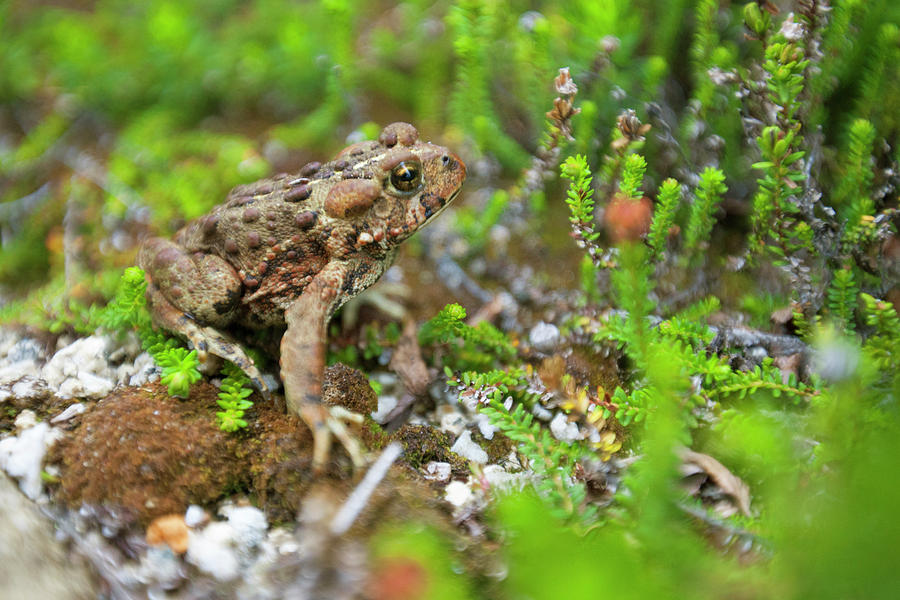
Toadlets on the move! 🐸 Thanks to the superstar Toad Shepperd volunteers scouting the trails, we have an update that toadlets are migrating into the trails from the southwest corner of Allen Lake. This amazing transformation happens in just a few weeks. Going from tadpoles with no legs, propelled around by their tails, eating aquatic plants, detritus and algae. Once their legs grow in and their tails are gone, they become terrestrial! Toads are primarily insectivores. ❣️ Want to help spread awareness about this species at risk while it migrates in the Forest? We welcome `Toad Patrol` volunteers to join an info booth to inform trail users about the importance of this creature and its whereabouts. 📨 Email heather@cumberlandforest.com to learn more! 🐸 Stay tuned to unitedridersofcumberland and our socials for updates on trail closures.
We are able to open Perseverance Bridge meaning climbing access via Davis Lake Main, to Bear Buns climb is good to go. (See the green line on the map). After Bear buns climb go over the reservoir bridge to Old Bucket Access road which gets you towards the back of the network. This route is OPEN. Directions are: cross Perseverance Bridge and continue on the Davis Lake Main, avoiding the closed lower section of the climbing trail, you can continue up the Davis until you turn left up the three pitches. You can then join the lower climbing trail midpoint, and go up to the first map kiosk where you can join Bear Buns climb and beyond. Other trails that remain closed are: Shortguts, Sykes Bridge, Bear Buns, Bucket of Blood, The Pig, Hai Gai, the Potholes and Broncos Perseverance. Also closed are Broadway, Off Broadway, That Dam trail, Steam Donkey, Slick Rock and Teapot. The entire Vanilla line is now completely open. If you see multiple toads on a trail or a road, please dismount and walk carefully through the zone. Please have dogs on leash and respect all signage, indicating active toad zones and trail closures. @thecumberlandforest @villageofcumberland #cumberlandtoadmigration
The Toad Booth may be done for the season, but the Western Toad Migration is not! We`re received an update from the toad reconnaissance team and unitedridersofcumberland that trail `That Dam Trail` and `Angie’s` are open. However `Steam Donkey`, is closed for the next few days. This seasons migration has been a collaborative effort, through signage, word-of-mouth, social media posts and our Toad Patrol Info Booth, to communicate why we foster care for this species of conservation concern – recognizing it`s role and place within our greater ecosystem. Thank YOU for following along with this journey tracing the toad route and sharing this important info with your forest and trail-loving community! #cumberlandtoadmigration #protectcumberlandforest #habitatprotection #westerntoad
Open for business, That Dam Trail and Angie’s are back on the agenda and free of Toads. Steam Donkey however, is busy with a breakout pod of toads and has been closed for the next few days. @thecumberlandforest #cumberlandtoadmigration
Isn’t it great to see rain? The toads think so too and have come out of the forest in all directions around Davis Lake Main, and perseverance Bridge. With the wet ground, it’s harder to see the toads and with them being scattered everywhere in that area and ask trail users to tread and go lightly with caution. @thecumberlandforest #cumberlandtoadmigration
The annual Western Toad migration continues in the Cumberland
Community Forest Park, with another wave finding themselves on Hai Gai. Trails that remain busy with toads are That dam trail, Broncos Perseverance, The Pig, and Hai Gai. The Cumberland Potholes also remain a busy toadlet corridor!
The Cumberland Forest is working with the United Riders of Cumberland and the Village of Cumberland to provide community updates on migration routes, educate the public, and update and relocate signage around to the affected areas in the park.
PLEASE NOTE: Off Broadway and Short and Curly are OPEN and free of the western toad migration. These trails have not seen any toad activity for some days now and can be enjoyed by all trail users. We are still seeing some toad activity on Broadway and the bottom of the Climbing trail which will remain off limits for a few more days.
Off Broadway and Short and Curly are OPEN and free of the western toad migration. These trails have not seen any toad activity for some days now and can be enjoyed by all trail users. Trails that remain busy with toads are That dam trail, Broncos Perseverance, The Pig, and Hai Gai. We are still seeing some toad activity on Broadway and the bottom of the Climbing trail which will remain off limits for a few more days. @thecumberlandforest #cumberlandtoadmigration
Looks like it’s not only toads crossing the Davis Lake Main. Today’s toad update is That damn trail and off Broadway have been seeing a new wave of late leavers from Allen Lake. The Davis Lake Main bridge is very busy with toads passing under and onto Broncos Perseverance and The Pig which are the hot spots right now. The China bowl potholes are still very much closed, please don’t visit the potholes. Also busy with toads is Hai Gai which has started to see large migration numbers. As we still see some of the last toads passing through the Davis lake Main area, it’s great to see people walking over the bridge watching their step. We’re hoping to reopen Broadway and the bottom of the climbing trail very soon. @thecumberlandforest #cumberlandtoadmigration
131
3
Migration
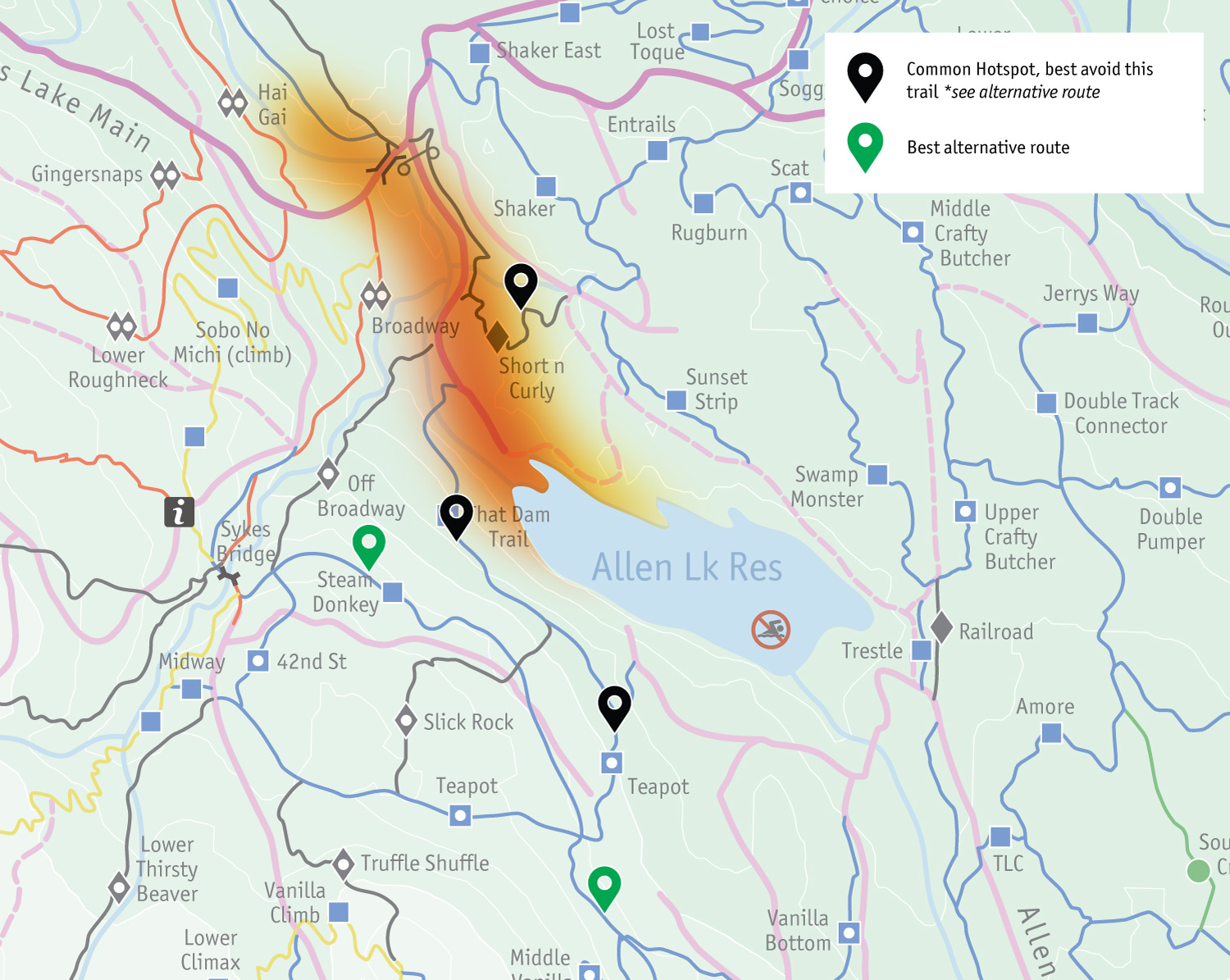
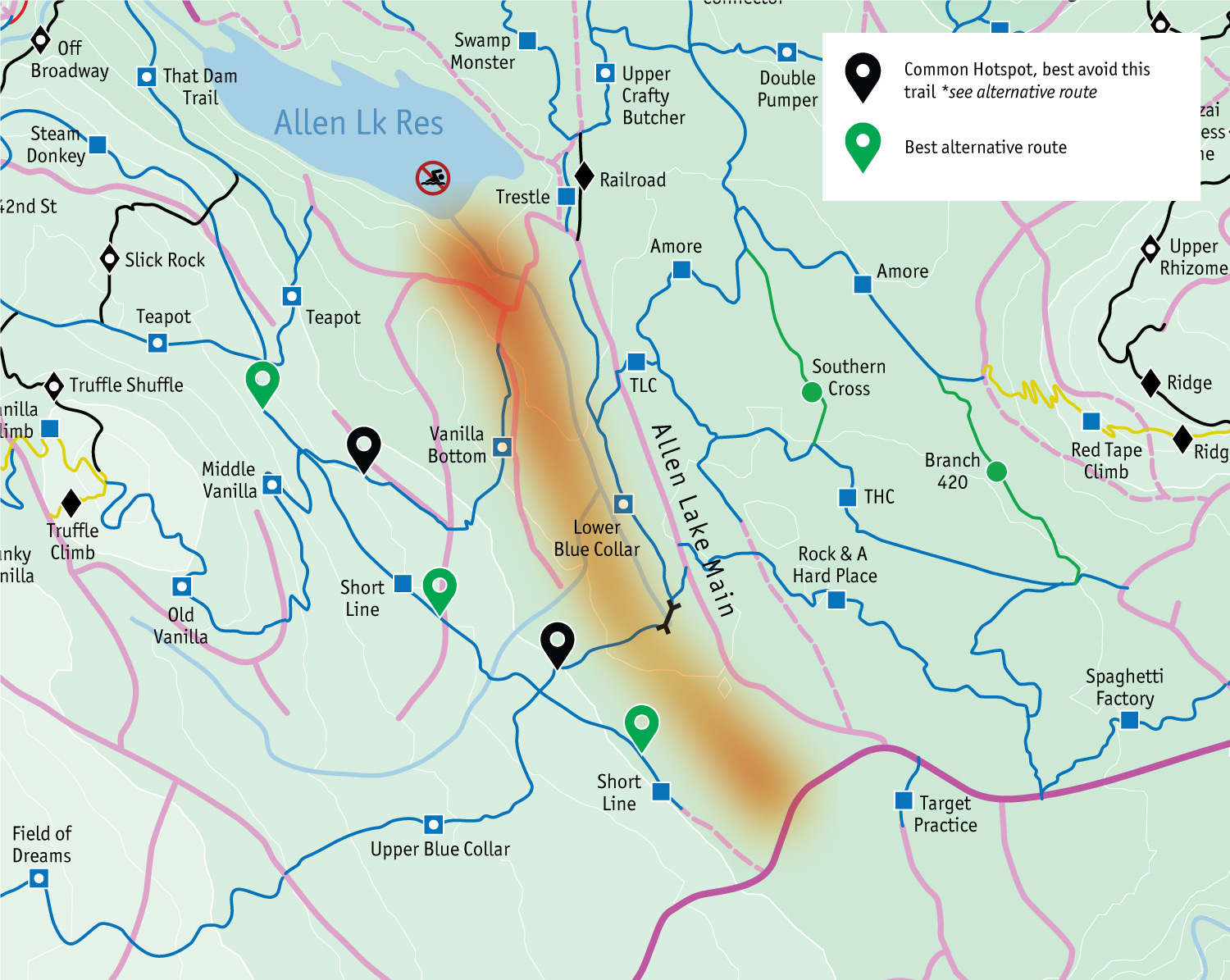
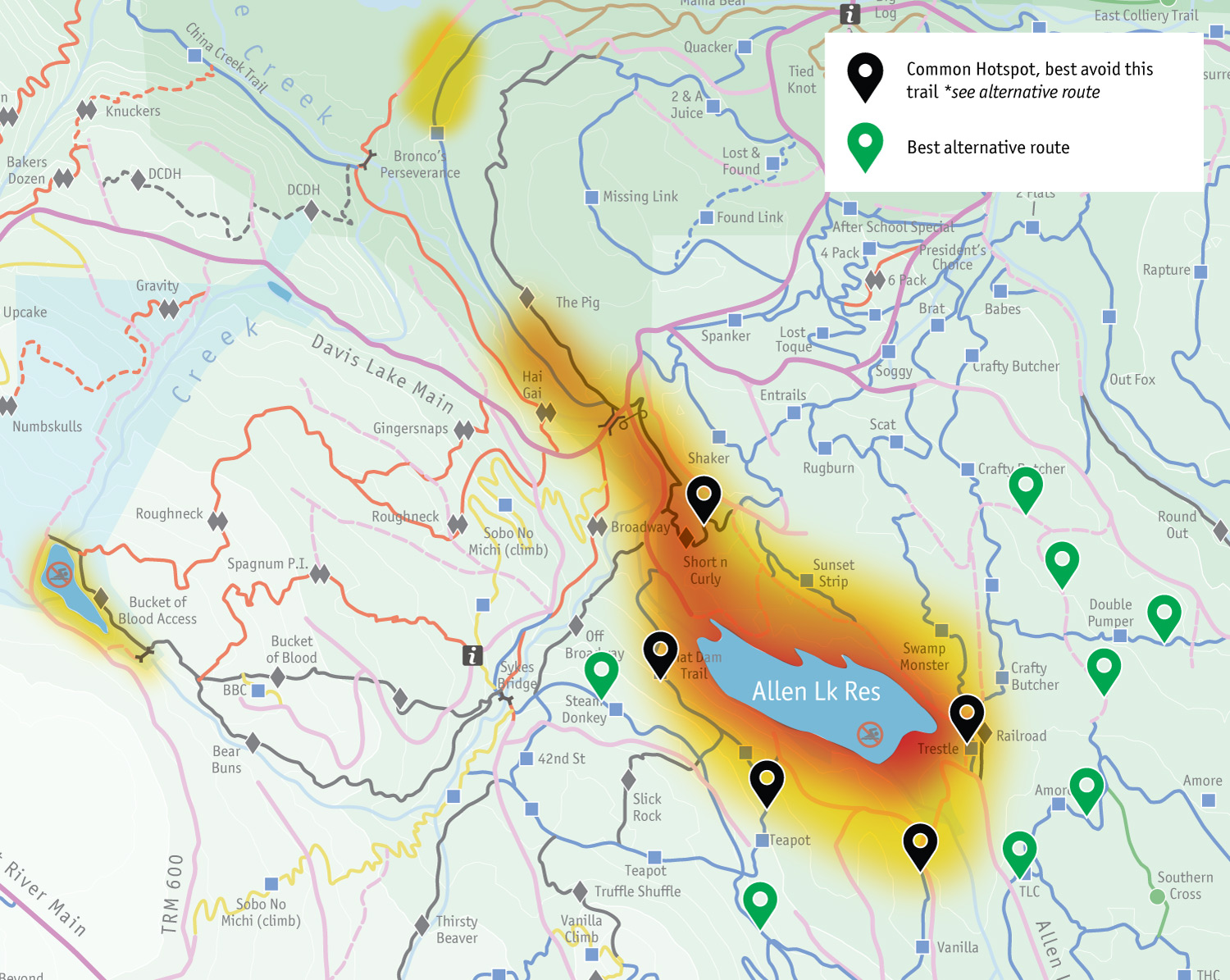
The toadlet migration occurs in the summer months of July and August and usually lasts about two weeks. During the migration period, we ask people to use voluntary detours to help ensure the survival of the population of toads. Information signage is posted on trailheads and exits during the migration period. The western toadlets move from aquatic habitats into the forest mainly around the fringes of Allen Lake and often with concentrations around the East side and West end of Allen Lake. The movement of toadlets is from 400m up to 1,600 m from the waters. Toadlet movement patterns are mostly on mass and often occur during the cooler mornings and evenings. Seeing carpets of toadlets during the migration is not uncommon and it’s best to avoid affected trails and seek alternative routes during this time.
(See map & alternative route notes below)
2026 Western Toad Migration Map2025 Western Toad Migration Map2024 Western Toad Migration Map2023 Western Toad Migration Map2022 Western Toad Migration Map2021 Western Toad Migration Map
Trails to avoid during migration weeks.
All trails surrounding Allen Lake
Vanilla Bottom, Lower Blue Collar, That dam trail, Trestle, Railroad, Swamp Monster, Short & Curly, extending to Hai Gai, Broncos Perseverance and The Pig.
Trails that commonly see migrating toads
Vanilla Bottom, Lower Blue Collar, Broadway, Off-Broadway, Sobo No Michi, Both Thirsty Beavers.
How to avoid Trestle from Blue Collar or Vanilla.
Take TLC, Amore, Amore Connector (cross Double Pumper), and follow the Double track to connect with Middle Crafty Butcher.
How to bypass Lower Sobo No Michi (Climbing trail) to reach the western side of the trail network
After crossing the Davis Lake Main (DLM) bridge over Perseverance Creek, do not turn left onto the access to Sobo No Michi (climbing trail), instead, stay on the DLM, and after 100m take the next left up the Three Pitches road for 200m where the climbing trail crosses that road and join the climbing trail there.
No Toad sightings have been observed in the below areas and zones.
XC zone and Eastern block. (See heat maps above)
Western Toad information
Range/Distribution
Coastal rainforest, British Columbia and Alberta, Southeast Alaska, Washington, North Central California, Sierra Nevada, Montana, Colorado, and New Mexico.
What is their conservation status?
Western toads are listed as a Yellow species. Yellow are species that are apparently secure but that have either a restricted distribution or perceived future threats. In B.C., species and ecological communities are assigned to one of three lists, based on their provincial Conservation Status Rank. Red-listed species and ecological communities are Extirpated, Endangered, or Threatened in British Columbia. Blue-listed species and ecological communities are of Special Concern (formerly Vulnerable) and Yellow-listed species and ecological communities are secure.
How do they reproduce?
Western toads’ breeding season takes place between March and May but can be extended until July. During breeding seasons these toads prefer shallow water wetlands with high pH levels in the water in which to lay eggs. Eggs are laid and can contain up to 16500 eggs per clutch and often in two strands which they attach to vegetation in the water, usually near the shore. Once laid, the warmth of shallow waters acts like a positive catalyst and speeds up the development of the eggs. The eggs quickly develop into tadpoles that hatch and swarm in groups of hundreds or thousands of individuals through the warmest, shallowest water available. The tadpoles transform into toadlets and leave the water. Dense aggregations of toadlets are often found hidden along the shore of breeding sites and start their migration. Usually clustered in mass they move when the weather turns cool and mostly at night, in the mornings and evening. Not usually during the height of the day. 99% of these toadlets won’t survive to reach adulthood which is usually after 2 – 3 years of living.
After spring breeding, Western Toads spend the summer and fall foraging in warm, low-lying areas. They are primarily nocturnal but are active during the day at higher elevations and latitudes. As the weather gets cold in fall and winter, Western Toads retreat into hibernation to await spring.
Predators
Tadpoles: Fish, reptiles, amphibians, birds, mammals. Adults: Ravens and other birds, reptiles, amphibians, and mammals.
Hibernation
Western toads may spend up to six months of the year in hibernation during cold months. Usually in natural chambers or burrows in the forested cover below the frost line. These are usually located adjacent to streams with constantly flowing water which helps maintain above-freezing temperatures.
Are they dangerous?
These toads are non-aggressive amphibians and have never attacked a human first, in their life history. However, adult western toads may discharge a whitish toxin, which is mildly poisonous. They emit this from their warts and parotid glands. This poison is not enough to kill humans, but it does have psychoactive properties. This poison can be fatal to your dog.