
How a Landmark Land Use Agreement Transformed Cumberland’s Mountain Bike Community
By Mike Berard
In December 2025, the United Riders of Cumberland (UROC) and the private landowners surrounding the village of Cumberland, B.C., Mosaic Forest Management, TimberWest, and Hancock now Manulife Investment Management, mark the ten-year anniversary of a land use agreement that reshaped the Cumberland trail network and set a new standard for recreation partnerships on private forest land.
What many visitors and even long-time locals may not realize is that the 2015 agreement was not a sudden breakthrough. It was the result of nearly two decades of trial and error, political evolution, community organizing, and countless conversations that took place long before mountain biking became central to Cumberland’s identity.
Before the Agreement: The Wild West Years
When riders talk about “the old days,” they are often referring to the early 2000s, a time when the mountain bike scene was exploding, trails were multiplying, and almost everything was happening unofficially.
Riding Fool Hostel and UROC president from 2008-2012, Jeremy Grasby, remembers that period vividly. “Land relationships and arrangements have changed a lot since you and I started riding, 20 or 30 years ago,” he says. “Even ten years ago, the way things were done is drastically different.”
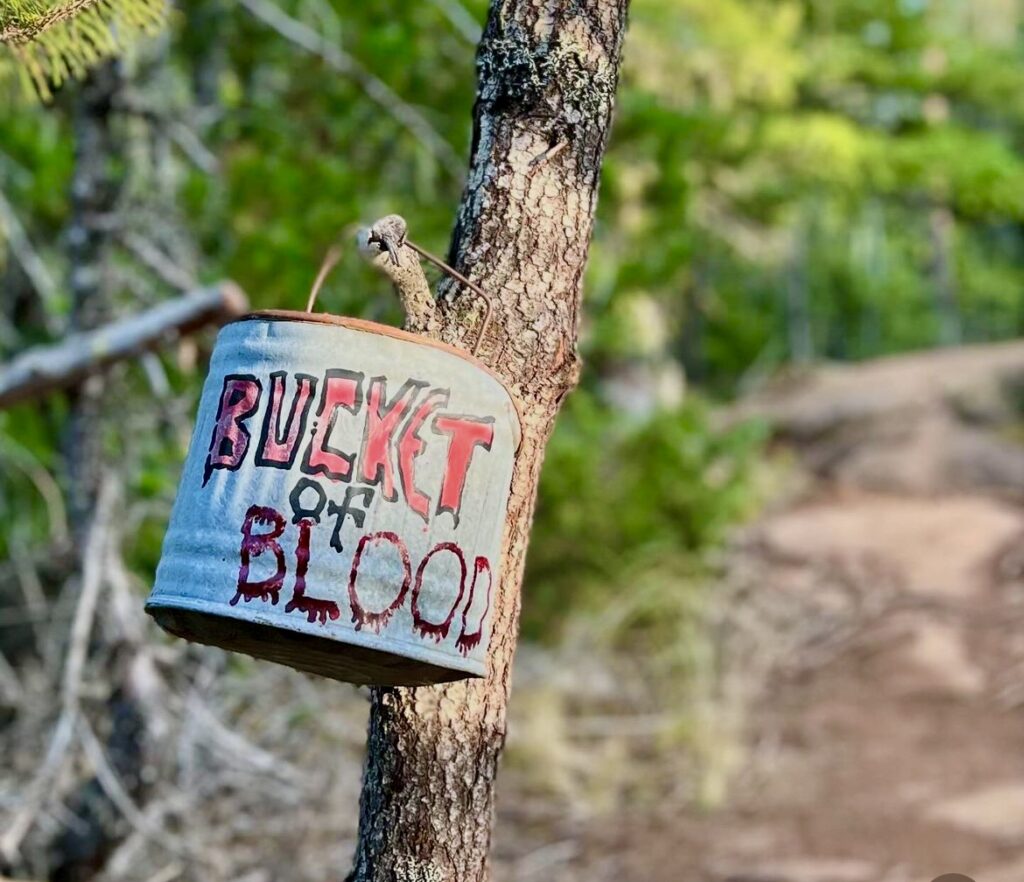
Riders pushed bikes up the notoriously steep and historical trail, Miners, navigated rough creek crossings near village water reservoirs, and descended raw, hand-built lines like Bucket of Blood, which is still considered an iconic trail from the early days.
These trails crossed a patchwork of privately owned working forests. With UROC yet to be formed, event organizers operated under the Comox Valley Cycling Club’s insurance. Permission was informal, tolerated rather than granted.
Mike Manara—who served as UROC president from 2012-2016, remembers those blurry lines well: “If there is a small group building trails, you need legitimacy and structure to protect them. Back then it was all handshakes and hoping nothing went wrong.”
Hancock issued keys to certain gates for event organizers. Foresters and riders knew each other by name. It was casual and precarious.
As Grasby puts it: “We were out there building trails illegally, but they knew what we were doing. It worked until it didn’t.”
The Turning Point: Bucket of Blood and the Push for Legitimacy
The first major wake-up call came around 2006 when TimberWest announced plans to log the area containing Bucket of Blood. Riders were stunned. “That was the trail,” Grasby recalls. “The meat and potatoes. When they wanted to log it, it was like, ‘you can’t do that.’”
But TimberWest was entirely within its rights. Meetings, appeals, and presentations to the Comox Valley Regional District could not change the outcome.
For Manara, that moment clarified the stakes: “Bucket of Blood getting logged was a catalyst. It made us realize we needed legitimacy, an organized voice to protect trails beyond just events.”
This realization led directly to the formation of UROC in 2008, driven by a shift from protest to collaboration. Grasby sums it up simply: “We had to work together. You could not be oppositional.”
Learning from Others, Building Something New
Formal recreation agreements on private forest land were almost unheard of at the time. UROC needed a model that did not exist nearby.
Through mountain bike tourism networks, they discovered what Rossland was up to, a historic mining town surrounded by private land and home to a pioneering multi-owner access agreement.
“Rossland was like our sister city,” Grasby says. “We drew heavily from them.”
Manara recalls the pitch to landowners: “Rossland had 15 landowners. We only had three, Hancock, TimberWest, and the Village [of Cumberland]. This should be simpler. But it took years of trust-building.”
The breakthrough came from inside Village Hall.
New Chief Administrative Officer Sundance Topham met Grasby and Manara at the iconic Waverly Hotel. He immediately recognized the gap and proposed the creation of a Parks and Recreation Outdoor Coordinator position to support UROC through negotiations and legal processes.
Grasby remembers the moment clearly: “There was no municipal position to help. We needed administrative support. That was the TSN turning point.”
Council approved the position, demonstrating that the Village recognized the growing significance of mountain biking. Manara agrees: “That staffing decision gave UROC capacity. It showed landowners the Village was committed too.”
Slow, Patient Work: The Path to Signing
Even with political will, the agreement took years to finalize. Trail life continued in the meantime. New lines were built, logging proceeded as usual, and the arrival of the trail map-focused app TrailForks made things more complicated. TimberWest asked UROC to remove the Cumberland map layer until a formal agreement existed.
“They needed to show due diligence,” Grasby says. “They told us to stop promoting public access on private land.”
But cooperation was also increasing. When the legendary trail Bear Buns began collapsing into the creek it ran parallel to, landowners approached UROC to relocate the trail, a quiet but significant sign of trust. UROC also adopted industry standards to demonstrate professionalism. As Manara explains: “It was not fear, it was obligation. We had to meet expectations. Standards proved UROC was a reputable partner.”
Step by step, the groundwork for an agreement was laid.
After Signing: From Backyard Trails to a World-Class Network
Once the 2015 agreement was signed, the transformation was rapid. UROC completed a full network inventory, assessed aging wooden features, introduced consistent signage, rebuilt bridges, improved drainage, and shifted from reactive maintenance to strategic planning. “Once we signed,” Manara says, “it was like, now we have legal access. Trails were built to a standard. It changed everything.”
Grasby agrees: “You cannot just have people building wherever they want. Now you get proper vision for the network, connectivity, safety, planning.”
Mechanized trailbuilding also became possible, something that would have been unthinkable in the early years. Manara notes: “Mechanized work let us build things we could not before. It gave some trails a bike-park feel while keeping them sustainable.”
Rogue trailbuilding, although still rare, remains one of the only remaining risks to the relationship.
A Template for the Island, and Beyond
Both men believe the impact of Cumberland’s agreement extends far beyond the local network. Grasby puts it simply: “There is a template here. Four clubs up and down the Island have followed it.”
Manara emphasizes the broader community benefit: “This agreement invited people into the forest. Now they experience working forests firsthand. It creates appreciation across the whole community.”
What once seemed impossible, public recreation on private industrial land, is now achievable and replicable.

A Decades-Long Achievement Worth Celebrating
Today, riders drop into the forest and choose from dozens of professionally maintained trails that handle rain, traffic, and seasonal changes with remarkable resilience. They also know the safety of both the forest and the people who use will be cared for. It is easy to forget how fragile the system once was.
Colin Koszman of Mosaic explains how exhaustive the process of protecting the forest is, “During the summer, when wildfire risk becomes high or extreme, Mosaic, the Village of Cumberland, and the fire chief, Mike Williamson, all have weekly conference calls. It’s an important collaborative step in terms of communication about the land base, wildfire risks, and public behavior.” And it’s not just about the mountain bikers.
“Even though our main agreement is with UROC, there are others as well.” Says Koszman. “There’s the BC Bike Race, the Island Gravel Series, MOMAR, the Dodge City X – probably five or six others I haven’t even listed. All those groups have access agreements. We have seven or eight agreements with ATV clubs and a couple with snowmobile clubs.” Mosaic also donates logs and lumber for projects in the forest, like the Mosaic Hut at the top of the climbing trail and the big, heavy slab benches Mosaic gave to UROC for resting spots.
For Manara, the anniversary of the partnership represents patience and persistence: “It is decades of relationship-building. If you do not have a club like UROC, you do not have these trails.”
Grasby echoes that feeling: “It is entirely about relationship building, having the right people in the right places at the right time.”
Ten years after signing, and nearly twenty years after the first attempts at dialogue, Cumberland’s trail network stands as one of the most respected riding destinations in Canada. And it rests on a foundation built one conversation, one handshake, and one trail at a time.
